


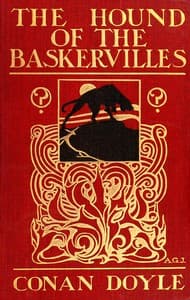
The Hound of the Baskervilles
by Arthur Conan Doyle
““For the very simple reason that I see the dog himself on our very door-step, and there is the ring of its owner.””
Holmes explains how he identifies the owner of the cane by noticing the dog outside and the leash ring on the stick.
Chapter 1
Why The Hound of the Baskervilles Matters
The Hound of the Baskervilles is one of the most influential detective novels ever written, helping define the modern mystery genre and cementing Sherlock Holmes as a cultural icon. Its blend of gothic horror, scientific reasoning, and atmospheric suspense continues to shape crime fiction, film, television, and popular expectations of the detective story.
Key Themes
Reason versus superstition
The novel repeatedly pits Holmes’s scientific deduction against the curse legend and the moor’s ghostly reputation, showing how fear can turn ordinary events into supernatural ones.
Observation and deduction
From a cane and boot clues to footprints, telegrams, maps, and scents, Holmes solves the case by interpreting small details others overlook.
Fear as a weapon
Stapleton’s plan depends on terror: the legend of the hound, eerie sounds, fog, and rumor all help weaken his victims before the final attack.
Inheritance and hidden identity
The Baskerville fortune drives the plot, and the villain’s concealed family connection reveals how identity can be manipulated for greed and revenge.
Deception and disguise
False roles, forged stories, secret surveillance, and misleading appearances dominate the novel, making truth difficult to distinguish from performance.
The danger of isolation
The moor’s remoteness and the physical isolation of Baskerville Hall create vulnerability, allowing secrets and crimes to flourish away from help.
Key Takeaways
- 1
Supernatural explanations often mask human motives and practical methods.
- 2
Careful observation of minor details can reveal major truths.
- 3
Fear can be as effective as physical force in controlling people.
- 4
Family inheritance can generate obsession, secrecy, and violence.
- 5
Appearances are often unreliable in detective fiction and in life.
- 6
Patience and method matter more than impulse when pursuing justice.
- 7
Isolation can intensify both paranoia and criminal opportunity.
Who Should Read The Hound of the Baskervilles?
This book is ideal for readers who enjoy classic mysteries, gothic atmosphere, and intelligent detective work. Fans of eerie settings, hidden identities, and slow-building suspense will especially appreciate the way Doyle blends rational analysis with a haunting landscape and a memorable villain.
Want This as an Audiobook?
Request the audiobook for The Hound of the Baskervilles and we'll notify you when it's ready.